 Written by Emily Wildau, MPP, and Jonathan Salazar, M.Ed.
Produced by New Mexico Voices for Children on behalf of the W.K. Kellogg Foundation
Download the full report (June 2026; 44 pgs; pdf)
Executive Summary
New Mexico has made historic investments in children and families, creating a strong foundation for improving child well-being. Over the past decade, state leaders have expanded access to early childhood education and care, increased funding for K–12 schools, strengthened healthcare and family supports and enacted policies that promote economic security for working families.
Despite this progress, many children and families continue to face barriers to opportunity. Access to high-quality education, healthcare and economic stability remains uneven, particularly for rural communities, low-income families and those facing long-standing structural inequities. To translate public investments into improved outcomes, policymakers must ensure programs are accessible, effective and sustainable over time.
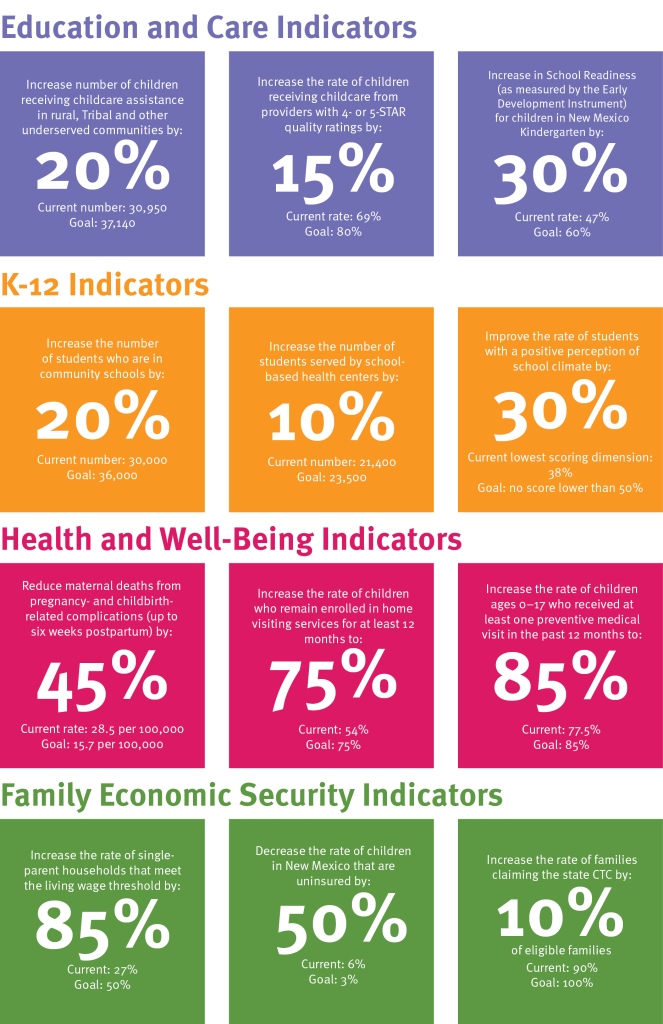
This roadmap is guided by a central question: How do these policy recommendations improve a child’s life? It focuses on three interconnected drivers of child well-being: education, health, and economic security. Throughout the roadmap, data are used to describe New Mexico’s progress and identify persistent barriers to improving child well-being. The roadmap also includes key indicators that should be monitored over time to measure progress and assess whether the recommended policies are producing meaningful improvements for children and families.
In education, policymakers can build on recent progress by strengthening the early childhood workforce, expanding access to high-quality programs and ensuring students receive the academic and social supports they need to succeed. In health, improving child and family well-being will require expanding access to preventive, maternal and behavioral healthcare while addressing workforce shortages and other barriers to care. In economic security, policymakers can strengthen family stability by increasing incomes, expanding access to public benefits and tax credits and reducing child poverty.
Together, these priorities provide a framework for translating New Mexico’s investments into measurable improvements in children’s lives. By investing in strategies that improve outcomes and focusing on equity, accountability and long-term results, state leaders can help ensure every child has the opportunity to grow up healthy, secure and prepared to thrive.