
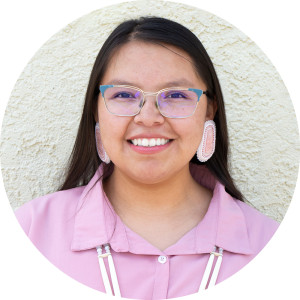
 By Hannah Naljahih, MPS
Policy Fellow
October 23, 2026
Native communities have been integral to New Mexico’s history, culture and identity. Yet, the voices, needs and perspectives of Native families, and particularly Native children, have not always been reflected in the state’s education policies and priorities. The Yazzie/Martinez v. State of New Mexico lawsuit has brought renewed attention to the state’s constitutional responsibility to provide a sufficient education for all students, particularly Native American students, English learners and students with disabilities.
This landmark case presents an opportunity not only to address longstanding inequities in our education system, but also to reimagine what education can look like when young people’s voices, experiences and aspirations guide decision-making. If New Mexico is committed to helping every student succeed, we must ask: What would an education system look like if it truly listened to and centered young people?
Students experience the strengths and shortcomings of our education system firsthand. Their perspectives can help identify gaps in support, inform policy decisions and shape solutions that reflect their needs. When asked what they would change about their schools, young people shared in the Freedom to Dream report a desire for stronger partnerships among schools, families, community organizations, local businesses and the communities they call home.
These partnerships can play an important role in making education more engaging, relevant and connected to students’ lives. Through hands-on learning, mentorships, internships and other work-based experiences, students can build practical skills, explore their interests and discover potential educational and career pathways beyond what they learn in the classroom. Partnerships can also connect students with trusted adults, additional resources and networks of support that strengthen their confidence and engagement.
These opportunities are especially important for students who have been underserved by the education system. When schools build meaningful relationships with the communities around them, they can better respond to students’ individual needs and create learning environments where young people feel supported, valued and empowered to shape their futures.
Strong community partnerships can also help schools better reflect the languages, cultures and lived experiences of New Mexico’s diverse communities. In the Freedom to Dream report, Native students emphasized the importance of learning environments that recognize and honor their identities and the cultures that shape their lives.
Culturally and linguistically responsive education is essential to creating a sense of belonging. Culturally relevant curricula, opportunities to learn and maintain Native languages, and partnerships with tribal communities, cultural organizations, elders and other community members can help ensure students see themselves, their histories and their knowledge reflected in their education.
When students’ cultures and identities are overlooked, school can feel disconnected from their lives and communities. That disconnection matters. According to the Freedom to Dream report, one in three New Mexico students experiences chronic absenteeism. Addressing absenteeism requires more than monitoring attendance; it requires understanding the barriers students face and creating school environments where they feel connected, respected and motivated to participate.
Investing in culturally grounded learning and meaningful community relationships can help schools address student engagement and well-being while creating more inclusive educational experiences.
Too often, student engagement is treated as a challenge to address after education policies and programs have already been designed. But when young people are brought into the conversation only after decisions have been made, opportunities to develop effective, lasting solutions are lost.
Young people should help identify the community partnerships, learning experiences and supports that will make education more meaningful to them. Their participation should go beyond sharing feedback; students must have opportunities to influence decisions, shape priorities and help evaluate whether policies and programs are meeting their needs.
This is particularly important for students who have been most disconnected from or underserved by their schools. Their experiences can reveal barriers that policymakers and educators might otherwise overlook. Making space for these perspectives is not simply good practice. It is essential to building an education system that responds to the students it is meant to serve.
New Mexico’s education leaders and lawmakers have an opportunity to turn these insights into meaningful policy change. By providing sustained funding and resources for community education partnerships, the state can expand access to hands-on learning, culturally responsive programs and community-based opportunities that help students thrive. These investments should be shaped through genuine collaboration among students, families, educators, community organizations, tribal communities and policymakers, with young people meaningfully involved in decisions that affect their education.
New Mexico has an opportunity to build an education system that recognizes the strengths, honors the identities and supports the potential of every child. The Yazzie/Martinez lawsuit underscores the state’s responsibility to address educational inequities and provide students with the resources and opportunities they need to succeed.
Meeting that responsibility requires more than funding programs or changing policies. It requires listening to young people, respecting their experiences and giving them a meaningful role in shaping the decisions that affect their lives.
When New Mexico invests in student-driven community partnerships and culturally responsive learning, it invests in more than education. It invests in stronger communities, expanded opportunities and a more equitable future for children and families across the state.
Young people should not simply be the recipients of education policy. They should be partners in shaping it. Centering their voices is essential to creating lasting change and building an education system in which every student has the opportunity to learn, belong and thrive.